Mortgage Rates Hit a One-Year High: What It Means for Homebuyers This Fall
Source: Freddie Mac
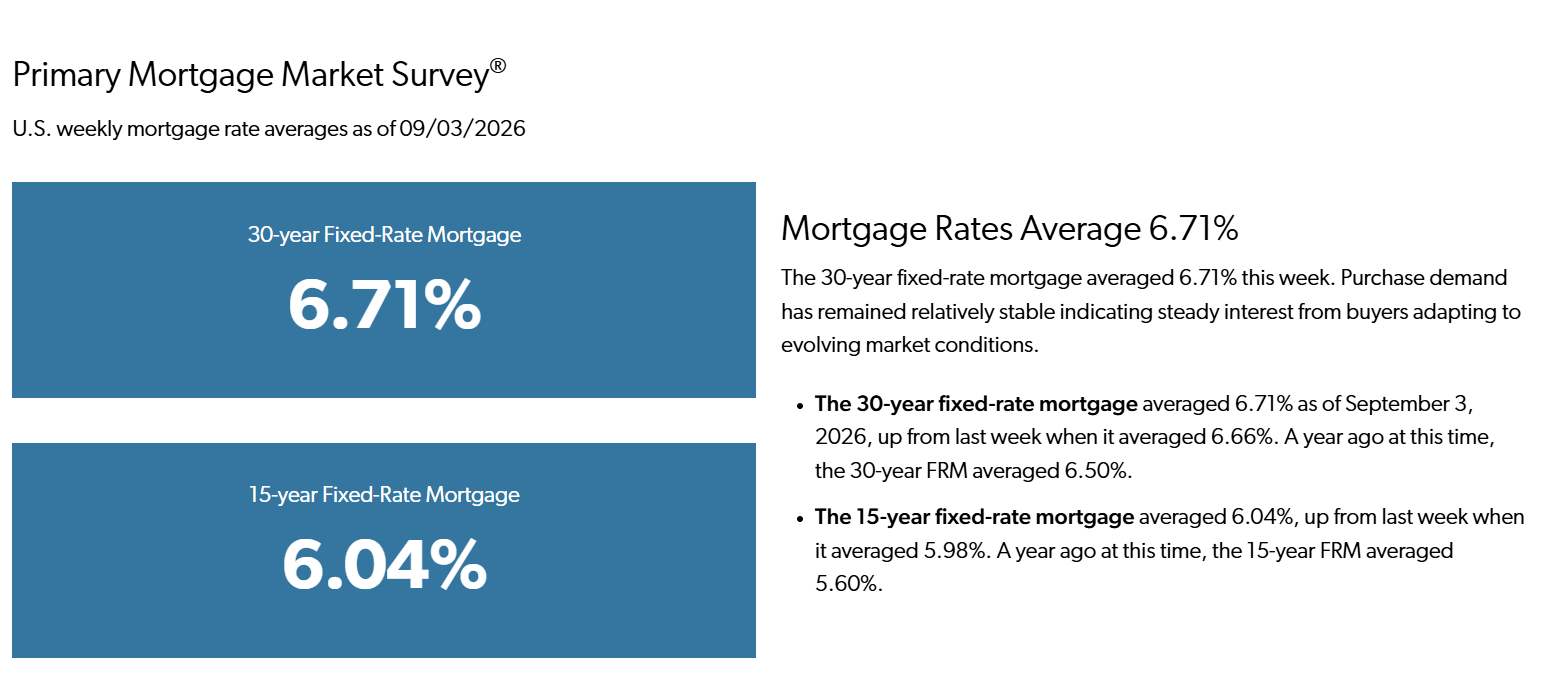
Mortgage rates just climbed to their highest level in over a year, and the timing couldn't be more important for anyone watching the housing market this fall. The average 30-year fixed mortgage rate is now hovering near 6.71% to 6.74%, according to Freddie Mac's latest Primary Mortgage Market Survey, up roughly 12 basis points from the previous week.
If you're planning to buy or refinance a home, here's what's driving the increase, what to expect in the weeks ahead, and how to make the most of today's market. If you missed our last rate check-in, you can catch up on where rates stood back in July.
Why Mortgage Rates Are Rising Right Now
Several forces are pushing rates higher heading into mid-September 2026. The biggest driver has been renewed geopolitical tension overseas, which pushed oil prices and the 10-year Treasury yield higher. Since mortgage rates typically track the 10-year Treasury, that spike flowed directly into home loan pricing.
At the same time, markets are bracing for a stretch of high-stakes economic data. Three key events on the Federal Reserve's economic calendar could move rates significantly over the next few weeks:
- The Consumer Price Index (CPI) report, released September 10
- The Federal Reserve's FOMC meeting, held September 15 to 16
- The PCE inflation report, due September 25
Each of these releases gives the market a fresh read on inflation, and inflation expectations are one of the biggest levers behind mortgage rate movement. If inflation data comes in hotter than expected, rates could push even higher. A cooler reading could ease some of the recent pressure.
Current Mortgage Rate Snapshot
Here's where rates stand as of early September 2026:
- 30-year fixed: approximately 6.71% to 6.74%
- 15-year fixed: approximately 6.01% to 6.04%
- 5/1 ARM: approximately 6.26% to 6.34%
That 30-year figure marks the highest level since July 2025, reversing some of the modest relief buyers saw earlier in the year. Forecasts for the week of September 7 to 11 suggest rates could edge slightly higher still, potentially approaching 6.78%, before the Fed meeting brings more clarity. You can track daily movement yourself using Bankrate's mortgage rate trends tool.
Will the Fed Cut Rates in September?
It's a common misconception that the Federal Reserve directly sets mortgage rates. It doesn't. The Fed controls short-term rates, but mortgage rates respond more closely to bond markets and inflation expectations. Still, the Fed's tone matters a lot for market psychology.
The Fed has held its benchmark rate steady through most of 2026. Heading into the September 15 to 16 meeting, expectations are mixed. Some analysts point to easing inflation as a reason for a possible rate cut, while others note that persistent price pressures could keep the Fed on hold. Most current forecasts suggest mortgage rates will stay broadly flat to modestly lower after the meeting, rather than dropping sharply. For a deeper look at how experts see rates trending, CBS News has a helpful breakdown of Fed rate cut expectations for 2026.
What Buyers Should Watch For
Rather than trying to perfectly time the market, focus on the signals that actually affect your monthly payment:
- Movement in the 10-year Treasury yield
- Inflation data surprises (CPI and PCE reports)
- Fed commentary on future rate policy, not just the rate decision itself
The Silver Lining: A More Buyer-Friendly Housing Market
While rates are higher, the broader housing market is actually shifting in buyers' favor. Nationwide, there were about 1.42 million homes for sale in July 2026, up 4.4% year over year, giving buyers more choices and more negotiating leverage than they've had in several years.
The national median home price sits around $400,000 to $410,700, with roughly 9.6 months of housing supply in many markets. That level of inventory is generally considered favorable to buyers, meaning less competition, more room to negotiate, and fewer bidding wars.
Regional Differences Matter
Not every market is moving the same direction. Smaller markets in Michigan, West Virginia, and Ohio have seen double-digit annual price increases, while several markets in Florida rank among those with the largest year-over-year price declines. If you're house hunting, local inventory and pricing trends matter far more than national averages.
What This Means for Buyers and Sellers
For Buyers
- Higher rates mean a higher monthly payment for the same loan amount, so it's worth running updated numbers with a lender before house hunting.
- Rising inventory gives you more room to negotiate on price, closing costs, or repairs.
- Ask about temporary rate buydowns or adjustable-rate options if you plan to refinance later.
For Sellers
- With more competition from other listings, pricing realistically from day one is more important than ever.
- Buyers are more rate-sensitive right now, so offering concessions like rate buydowns can help close deals faster.
- Homes that are priced and staged well are still moving. It's overpriced listings that are sitting.
Should You Lock In Your Rate Now?
With the Fed meeting and two major inflation reports all landing within the same three-week window, mortgage rate volatility is likely through late September. If you have a rate you're comfortable with and a home you're ready to buy, locking in now removes the guesswork. If you have flexibility, keep an eye on the September 10 CPI report and the September 15 to 16 Fed meeting, since both could shift rates in either direction.
Talk to your loan officer about a float-down option, which can let you lock in today's rate while still benefiting if rates drop before closing.
The Bottom Line
Mortgage rates have climbed to their highest point in over a year, driven by geopolitical uncertainty, rising Treasury yields, and an eventful few weeks of economic data ahead. But rising rates aren't the whole story. Growing inventory and more negotiating power are giving buyers real opportunities heading into fall, even in a higher-rate environment.
Whether you're buying, selling, or refinancing, the smartest move right now is to stay informed, get pre-approved early, and work with a lender who can help you navigate the next few weeks of rate movement with confidence. And if you're weighing the numbers on a purchase this year, don't forget to factor in the tax advantages of buying real estate in 2026.
